.png)


Traditionally focused on wealth preservation and intergenerational planning, family offices increasingly turn to venture capital (VC) to generate alpha—excess returns beyond traditional market performance. While some family offices actively pursue venture capital investments to drive growth, others use it as a diversification strategy to complement their existing portfolios.
This article explores how leading family offices approach venture capital, detailing sectoral preferences, risk management strategies, liquidity planning, and investment structures. By combining insights from family offices with broader industry research, we highlight best practices for generating alpha in venture capital while mitigating risks.
For decades, family offices have primarily allocated capital to real estate, fixed income, and public equities, which have long been considered stable and reliable. Still, as markets evolve and economic uncertainties persist, alternative investments—mainly venture capital—have emerged as an attractive avenue for wealth creation. Venture capital offers the potential for outsized returns, particularly in high-growth sectors like technology and healthcare. Institutional investors with longer investment horizons can capture higher alpha while managing volatility, making VC a compelling addition to investment strategies.
The generational transition within family offices is another key driver behind the shift toward VC. Younger family members are more inclined to embrace technology, innovation, and high-growth sectors, pushing investment strategies toward venture capital. New generations are prioritizing exposure to disruptive industries, leveraging their personal expertise and industry insights to capitalize on innovation-driven markets.
Generating alpha in venture capital means consistently outperforming the market by identifying and investing in high-potential startups. However, the way family offices define and pursue alpha varies. Some actively seek VC exposure for alpha generation, while others view it as diversifying portfolios and mitigating risks. Investments in early-stage sectors, such as biotech, require patience but can lead to significant long-term returns. Some family offices spread investments across multiple sectors, while others focus intensely on a single industry where they have deep expertise.
Venture capital and private equity present distinct but complementary approaches to generating alpha within family office portfolios. Venture capital focuses on early-stage investments with high growth potential, while private equity emphasizes mature businesses that can be optimized for increased value.
Family offices have traditionally leaned toward stable asset classes such as real estate and public equities. However, our research indicated a clear shift toward private markets, which comprise approximately 30% of family office portfolios, up from 29% last year. This trend reflects an increasing appetite for higher-risk, high-reward investments, particularly in private equity, venture capital, and private credit.
Despite recent volatility in venture capital and private equity returns, family offices continue to allocate a growing share of their portfolios to these assets. Private credit has emerged as a favored category due to its strong yield generation in the current interest rate environment. The data suggests that while liquidity remains a concern, family offices prioritize long-term growth over short-term market fluctuations.
On the other hand, venture capital strategies revolve around funding early-stage startups with the potential for exponential growth. Early-stage investments are inherently risky but can yield massive returns when successful. Growth-stage investments involve financing companies that have already validated their business model but need capital to scale. Additionally, venture capitalists often focus on disruptive technology investments to support innovative companies with groundbreaking technologies that could dominate markets within five or more years.
A significant portion of assets is allocated to technology, with expansion into healthcare due to its high growth potential. Life sciences investments often have long development cycles but strong return potential. Many family offices prioritize sustainable investments while avoiding industries such as weapons manufacturing.
Many family offices allocate significant portions of their portfolios to the United States, capitalizing on its mature and well-regulated venture ecosystem. Some investors actively avoid exposure to regions with higher regulatory and geopolitical risks, such as China and Russia.
Some family offices prefer direct investments in early-stage startups, while others invest in funds but prioritize co-investments to optimize returns and minimize fees. Partnering with venture capital firms allows family offices to leverage shared expertise while reducing costs. Maintaining a liquidity reserve while committing to long-term venture capital investments ensures flexibility and risk mitigation.
Fund selection is crucial for family offices seeking exposure to these asset classes. Many family offices prefer to invest in a diversified portfolio of fund managers to reduce risk. Selecting the right fund manager involves evaluating their historical performance across market cycles, with second- and third-time funds often showing higher alpha and lower risks. Family offices ensure that none of their fund investments return below 1x, maintaining a safety net across their diversified holdings.
Risk management remains a core focus for family offices engaging in venture capital and private equity. In private equity, firms manage risk by investing in companies that generate steady cash flows, ensuring leveraged buyouts remain financially viable. The emphasis is on operational improvements and financial restructuring to maximize returns while maintaining stability. In contrast, venture capital carries more significant risk, as many startups burn cash rapidly and operate in highly competitive markets. The failure rate is high, but a successful investment can yield returns, offsetting multiple losses.
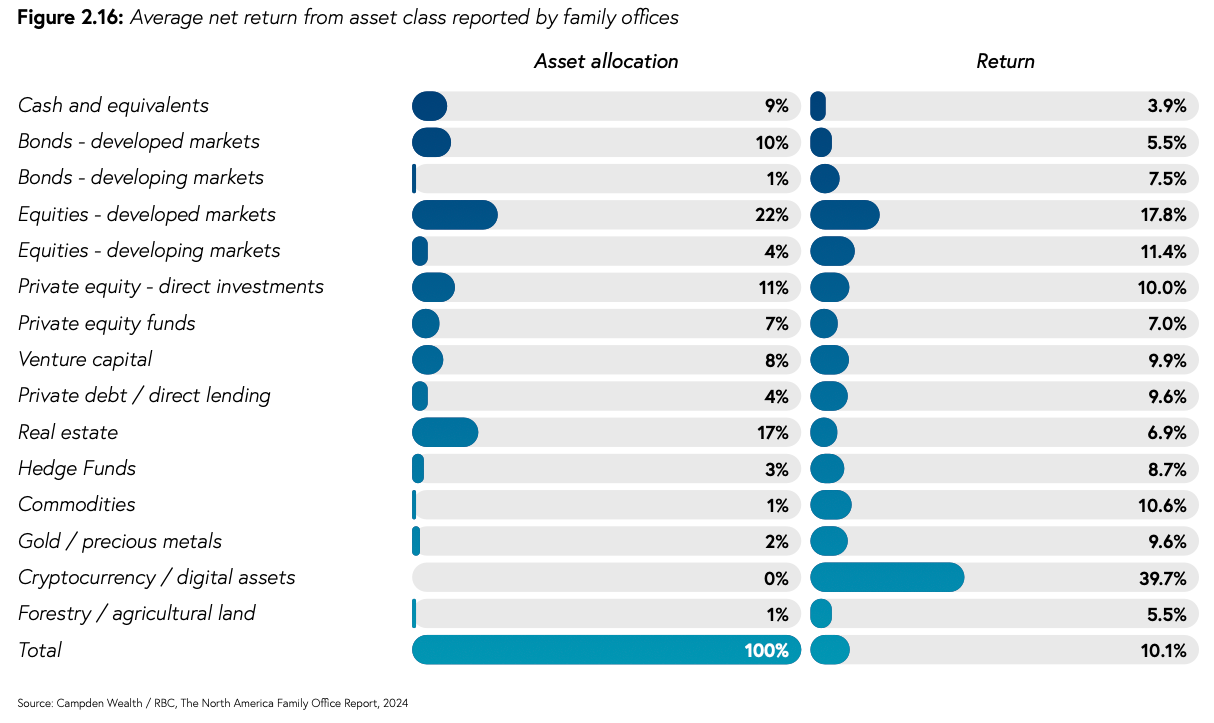
While public equities and private credit outperformed expectations, real estate, venture capital, and private equity funds struggled to meet anticipated returns. More than 40% of family offices expect a total portfolio return exceeding 10% this year, yet venture capital has underperformed compared to its historical high-yield potential.
Notably, private credit has gained favor among family offices, with 41% stating that returns exceeded expectations, reflecting its role as a stable income-generating alternative. Meanwhile, 17% of family offices reported that private equity funds underperformed, underscoring concerns about prolonged exit timelines and valuation uncertainties.
Market selection also plays a crucial role in risk management. Many family offices avoid politically unstable regions, opting for markets with strong legal protections and regulatory stability. Additionally, sectoral preferences influence risk exposure, with a preference for healthcare, technology, and infrastructure due to their resilience in economic downturns. Family offices can mitigate risks and enhance portfolio resilience by diversifying investments across multiple funds and sectors.
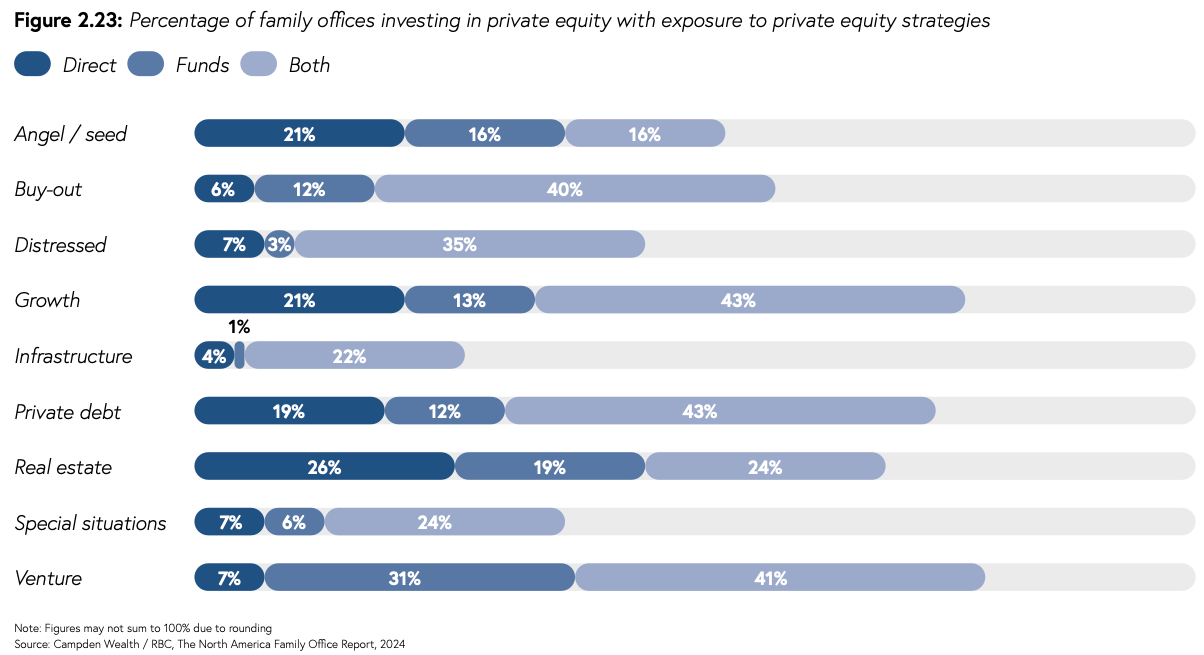
One of the most striking trends in family office venture capital strategies is the increasing preference for direct investments and co-investments over fund-based allocations. Historically, many family offices relied on VC and private equity funds, but they are now taking a more active role in deal sourcing and investment decisions to reduce fees and maximize returns.
Our research shows that co-investments are gaining traction, with families leveraging their networks to access high-quality deals at lower cost structures. Direct investments, while requiring more due diligence and expertise, allow family offices to play a hands-on role in value creation. This shift reflects a broader movement toward personalized investment strategies tailored to family office expertise and industry knowledge.
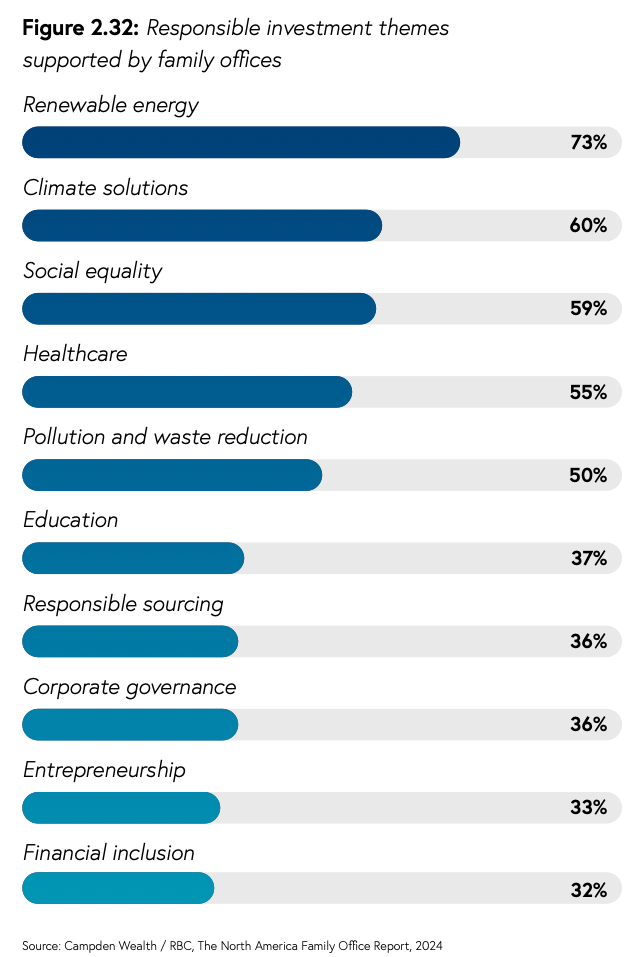
As sustainable investing becomes a priority, many family offices align their venture capital and private equity strategies with environmental, social, and governance (ESG) principles. Recent data indicates that a significant percentage of family offices prioritize responsible investment themes, with renewable energy (73%), climate solutions (60%), and social equality (59%) leading the way.
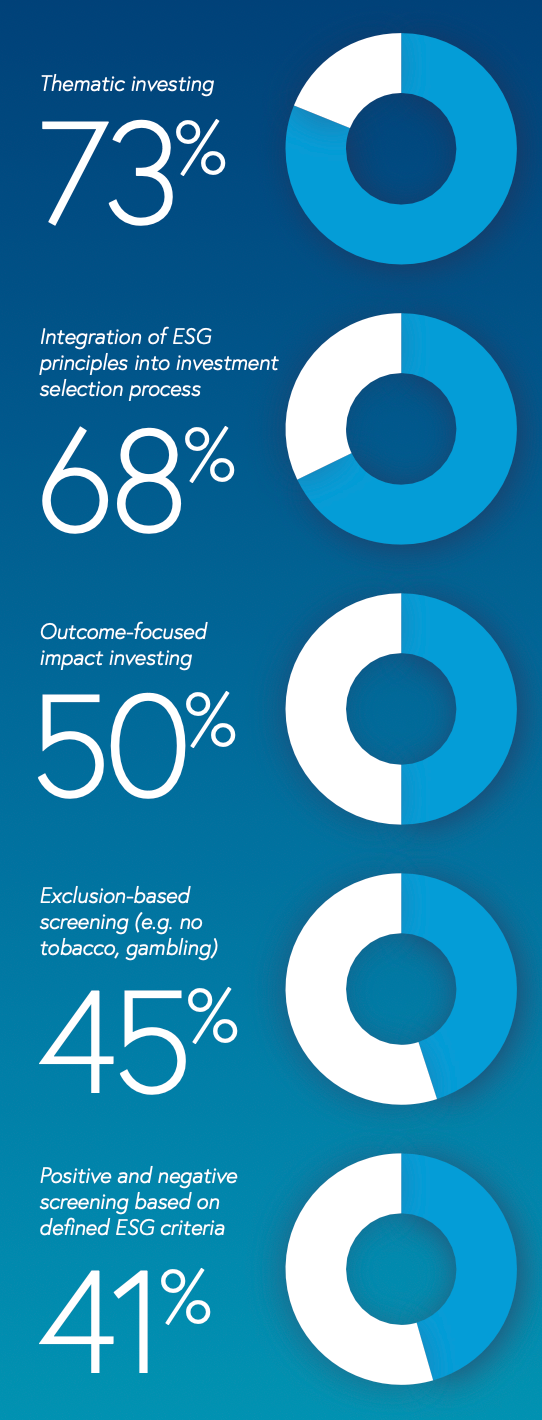
Beyond specific investment themes, the methodology used to integrate ESG considerations into investment decision-making varies among family offices. A substantial proportion (73%) favor thematic investing, while 68% incorporate ESG principles directly into their selection process. Meanwhile, 50% focus on outcome-based impact investing and 45% utilize exclusion-based screening to avoid sectors like tobacco and gambling.
These trends highlight the growing influence of ESG-driven decision-making within family offices. By focusing on impact investing and sustainable industries such as healthcare and clean energy, family offices generate long-term alpha and contribute to positive societal change.
Liquidity management remains a key challenge for family offices engaged in venture capital. The lack of exit opportunities in private equity and venture capital has significantly affected cash flow planning, making liquidity concerns more pressing than in previous years. Many family offices have found that long-term commitments to VC funds create inflexible capital lock-ups, leading to an increased preference for co-investments.
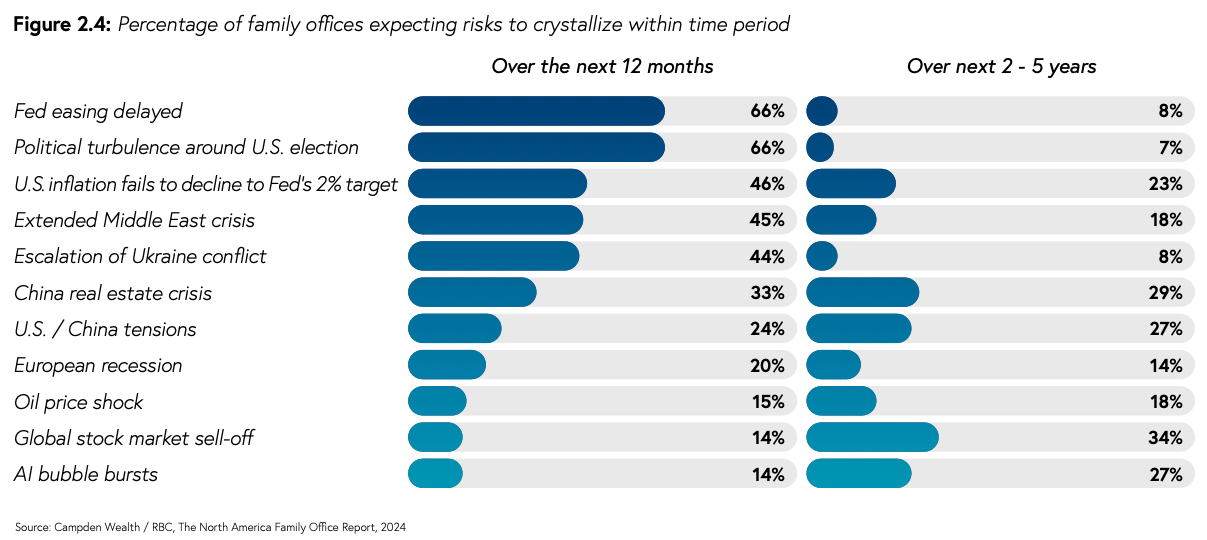
One major liquidity constraint stems from delayed Federal Reserve rate cuts, which 66% of family offices cited as a concern. Additionally, 46% of family offices worry that inflation will remain sticky above the Fed’s 2% target, influencing their decisions on cash reserves and capital deployment.
In response to liquidity concerns, family offices are shifting their portfolio allocations. Private credit exposure has risen to 39%, reflecting its role as a yield-generating alternative. At the same time, new capital commitments to VC funds are down by 24%, as investors seek to avoid long lock-up periods. Many family offices are holding higher-than-usual cash reserves—an average of 9% of total AUM—while prioritizing co-investments, which provide capital flexibility and lower fees.
Rather than relying solely on new capital inflows to sustain venture strategies, family offices are actively rebalancing their portfolios, ensuring they have adequate liquidity while still capturing long-term venture opportunities.
To maximize returns while managing risk, family offices are shifting their venture capital strategies in response to changing market conditions. One of the most significant trends is the move toward direct investments and co-investments rather than traditional VC fund allocations.
Many family offices now prefer co-investments, as they provide access to exclusive deals at lower fees and with greater flexibility. Direct investments are also gaining traction, with 41% of family offices indicating a preference for investing directly in startups rather than through venture capital funds. This shift reflects a desire for more control over deal selection, as well as a response to concerns over prolonged capital lock-ups in traditional fund structures. While fund commitments remain part of venture strategies, there is a clear trend toward balancing traditional fund investments with more active, hand-on approaches.
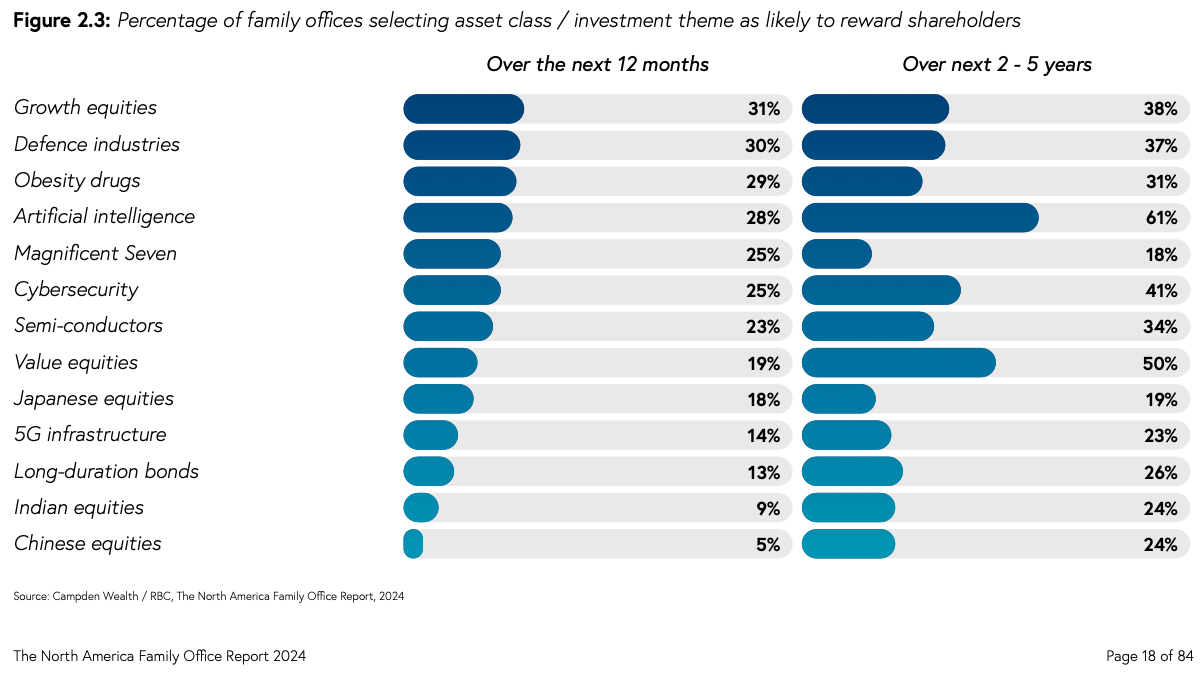
This preference for direct investments and co-investments is especially pronounced in sectors where deep industry expertise can create a competitive advantage, such as AI, cybersecurity, and healthcare. AI remains the leading long-term investment priority, with 61% of family offices identifying it as a key growth sector. Cybersecurity follows closely, as concerns over digital security continue to drive demand for technical solutions. Meanwhile, healthcare, particularly in the field of obesity drugs, has gained substantial interest due to its strong potential for sustained growth.
Rather than adopting a one-size-fits-all approach, family offices are now structuring their venture capital strategies around specialized expertise and direct access to promising investments. By prioritizing sector-specific knowledge, engaging in co-investments, and maintaining a balance between risk and liquidity, family offices are optimizing their portfolios to achieve superior long-term returns.
Venture capital is no longer an opportunistic asset class for family offices - it is becoming a critical driver of alpha, shaped by unique risk appetites, liquidity strategies, and sectoral expertise. While public equities and private credit have delivered stronger-than-expected returns, venture capital remains a high-risk, high-reward play, requiring a nuanced approach to asset allocation and liquidity management.
From our interviews, a few key themes emerged. First, family offices are increasingly favoring co-investments over traditional fund allocations to reduce fees and gain greater control over deal flow. This preference is especially pronounced among entrepreneur-led family offices, where deep sector expertise allows for high-conviction bets in specialized fields like healthcare and biotech. However, liquidity remains a major constraint, with some offices adjusting their venture strategies to ensure access to capital for large lifestyle purchases and portfolio rebalancing.
Geopolitical risk is also shaping capital allocation. Multiple family offices indicated a deliberate avoidance of Chinese and Russian markets, instead concentrating 80%+ of their portfolios in the U.S. and Europe. Meanwhile, the rise of next-gen investors is pushing allocations into AI, cyber security, and digital healthcare, reflecting a long-term bet on emerging technologies despite current valuation concerns.
The most successful family offices generate alpha by leveraging sector-specific knowledge, strategic liquidity management, and direct investment access. While some remain passive investors, those that adopt a high-conviction, research-driven approach to venture capital are poised to outperform over the long term.
As venture capital continues to evolve, the ability to identify market inefficiencies, leverage direct deal flow, and manage risk across economic cycles will determine which family offices thrive. Our venture capital fund works alongside family offices to navigate these complexities, providing tailored investment opportunities, sector-specific insights, and access to exclusive co-investments.